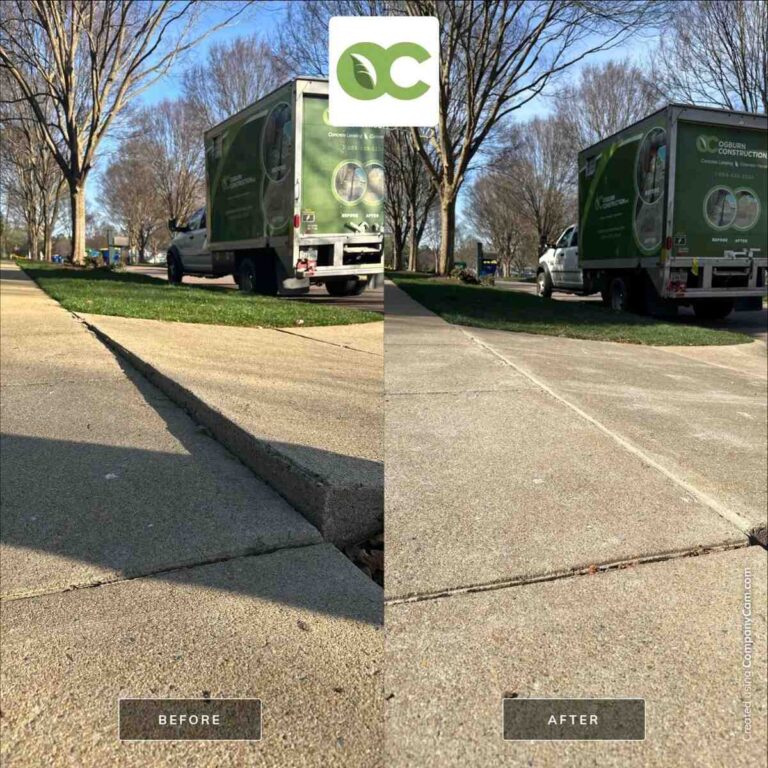
Concrete problems like sinking, cracking, or uneven surfaces are more than just cosmetic—they can pose serious safety risks and lead to expensive repairs if ignored. If you’ve noticed a tripping hazard on your sidewalk, a tilted patio slab, or sunken sections of your driveway, you’re likely exploring repair options. Two of the most talked-about methods are concrete grinding and foam lifting (also called polyurethane lifting or foam jacking). But how do they really compare?
This guide breaks down the key differences between these two approaches so you can make the right choice for your home or business.
Why Does Concrete Sink and Become Uneven?
Before diving into solutions, it’s important to understand why concrete sinks or becomes uneven in the first place.
Most sunken concrete is caused by:
- Poor soil compaction
- Soil erosion from water intrusion
- Tree root movement
- Heavy loads on weak ground
These issues result in settlement, where the slab no longer has the support it needs, leading to cracks, dips, or full sections sinking several inches.
What Is Concrete Grinding?
Concrete grinding involves mechanically shaving off the top of a concrete slab to reduce height differences. It’s commonly used to smooth out small trip hazards or level transitions between adjacent slabs.
Pros:
- Quick fix for minor height differences (under 1 inch)
- Less expensive for very small repairs
- Smooth finish
Cons:
- Only removes material—it doesn’t lift or stabilize
- Can expose aggregate, leaving an unfinished appearance
- Doesn’t address the cause of sinking (soil voids or erosion)
- Can create new drainage issues by changing slab angles
Concrete grinding is best suited for surface-level fixes and not ideal for structural repair.

What Is Foam Lifting?
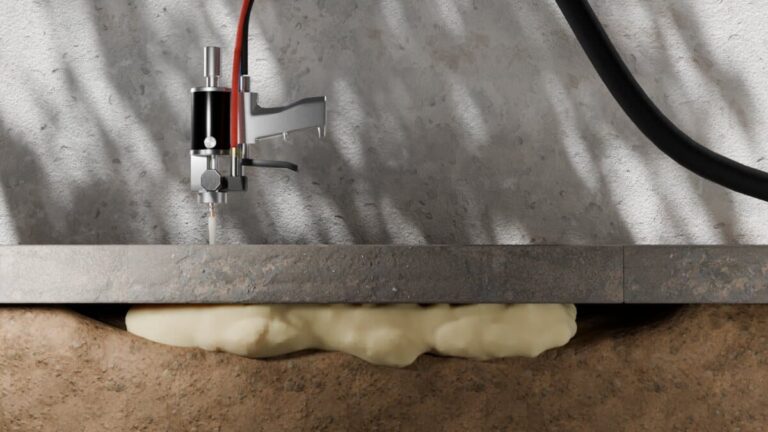
Also known as foam jacking or polyurethane lifting, this method uses a high-density, expanding foam called PolyLevel®. The foam is injected through tiny holes into voids under the slab. As it expands, it lifts the concrete back to its proper level and stabilizes the soil underneath.
Pros:
- Permanent lift—the foam cures to a rigid, load-bearing structure
- Fast—slabs are walkable and drivable within 15 minutes
- Minimally invasive—uses small drill holes and no demolition
- Lightweight and waterproof, unlike mudjacking
- Addresses root causes like soil erosion or voids
Cons:
- Not ideal for cosmetic surface wear (that’s where resurfacing helps)
- Higher upfront cost than grinding for very minor fixes
At Ogburn Construction, we use PolyLevel foam that can support up to 4,800 lbs per square foot, offering unmatched strength and speed.
Head-to-Head Comparison
| Feature | Concrete Grinding | Foam Lifting (PolyLevel®) |
| Fixes Trip Hazards | ✅ | ✅ |
| Lifts Sunken Slabs | ❌ | ✅ |
| Addresses Soil Voids | ❌ | ✅ |
| Permanent Repair | ❌ | ✅ |
| Cure Time | None (removes concrete) | 15 minutes |
| Structural Support | ❌ | ✅ |
| Aesthetic Impact | Can look rough or patchy | Minimal impact |
| Longevity | Short-term | 10+ years (with warranty) |
When to Choose Concrete Grinding
- You have very minor elevation differences (ideally under 1/2 inch)
- The slab is otherwise stable with no cracking or sinking
- You need a quick and cheap fix in low-traffic areas
Common Uses:
- Commercial sidewalk code compliance
- Uneven expansion joints with minimal drop

When to Choose Foam Lifting
- Your concrete has sunk, tilted, or cracked
- You see pooling water or shifting slabs
- You need structural support and long-term results
- You want to avoid replacement and preserve your concrete
Ideal Projects:
- Driveway lifting
- Pool deck leveling
- Interior slab repair
- Sidewalk lifting to eliminate trip hazards
For more information, see Concrete Repair Guide: Common Issues, Fixes & Costs Explained.

A Real-Life Example
A homeowner in Richmond, VA noticed their front walkway had dropped nearly 2 inches, creating a dangerous step. Grinding wasn’t an option—it would have thinned the slab too much. Instead, we used PolyLevel foam, lifting the walkway back to level within hours. We also sealed the joints with NexusPro, a waterproof sealant that prevents further erosion.
Now, their path is safe, level, and protected for years to come.
Bonus: Combine Lifting with Sealing or Resurfacing
Foam lifting doesn’t just stabilize—it creates the foundation for further upgrades. At Ogburn, we often pair lifting with:
- NexusPro® Crack & Joint Sealant – Flexible, waterproof, and UV-resistant
- Vuba Stone – A decorative, slip-resistant resurfacing system for patios, pool decks, and driveways that lasts over 20 years
Why Ogburn Construction?
With over 30 years of experience, Ogburn Construction is Central Virginia’s trusted leader in concrete repair. We’re proud to offer PolyLevel® foam, NexusPro® joint sealants, and Vuba Stone overlays—giving you lasting results without the mess or stress of full slab replacement.
Here’s Our Simple Plan:
Step 1: Schedule your free inspection
Step 2: Get a custom repair plan
Step 3: Enjoy long-lasting, beautiful concrete—guaranteed
Final Thoughts
If your concrete is sunken or unsafe, grinding might provide a quick cosmetic fix—but it won’t address the underlying issue. Foam lifting, on the other hand, offers a fast, permanent, and structural repair solution. It’s the smarter long-term investment for your property’s safety, value, and appearance.
Ready to Eliminate Your Concrete Hazards?
Book your free estimate with Ogburn Construction today. Let us lift, level, and protect your concrete—with solutions that last.